|



Into The Inferno: 75 Years On, The Most Horrifically Vivid Account of The Allied Bombing of DresdenBy VICTOR GREGG and RICK STROUD FOR THE DAILY MAILThe Daily Mail Feb. 14, 2020 |
Popular 
Mark Levin and Jonathan Pollard Push for Nuking Iran

Trump Appears to Surrender Strait of Hormuz to Iran, Tells Allies to 'Go Get Your Own Oil'

Trump Says U.S. Sent 'A Lot of Guns' to Iranian 'Protesters'

Trump Threatens Iran With Genocide If They Won't Meet His Demands: 'A Whole Civilization Will Die Tonight'

US and Iran Agree to Two-Week Ceasefire

|
 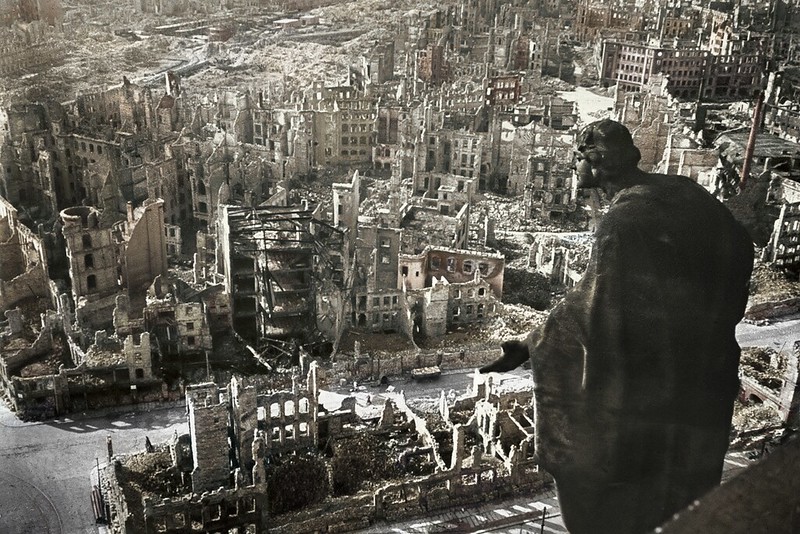 During the final months of World War II, from February 13 to 15, 1945, Allied forces bombed the ancient, cathedral city of Dresden, in eastern Germany. During the final months of World War II, from February 13 to 15, 1945, Allied forces bombed the ancient, cathedral city of Dresden, in eastern Germany. The bombing was controversial because Dresden's contribution to the war effort was minimal compared with other German cities — though it was a key transport junction and used by German forces to defend the country against Soviet forces approaching from the east. Before the huge air raid, it had not suffered a major Allied attack. By February 15, however, it was a smouldering ruin — 2,400 tons of high explosives and 1,500 tons of incendiary bombs were dropped on the city. An unknown number of civilians, somewhere between 35,000 and 135,000, were dead. British rifleman Victor Gregg was one of hundreds of men being held as a PoW in the city by the Germans. On the 75th anniversary of the start of the bombing, this is his eyewitness account of the devastation he left behind. Read More |