|



Bill Would Ban Use Of Military Items For Tennessee Law Enforcement Agenciesby Max HrendaJohnson City Press Jan. 20, 2015 |
Popular 
Netanyahu Confirms Plan to 'Merge' U.S. and Israeli Militaries

Sen. Lindsey Graham Dead at 71

Mark Levin Flying to Israel as Netanyahu Reportedly Seeks to 'Leverage' Levin to Trash Trump's Iran Deal

U.S. Must Prep to 'Welcome Large Numbers of Jewish Refugees,' Pro-War Lobbyist Mark Dubowitz Says

Israel Told Trump of 'Iranian Assassination Plot' Before He Declared MoU 'Over,' Report Suggests

|
 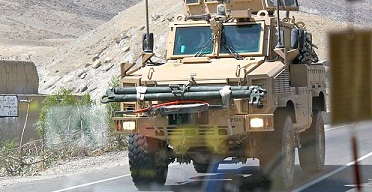 A Memphis-area state senator said he wanted Tennessee to join the national conversations involving both the public’s interaction with and perception of law enforcement agencies, as well as those agencies’ possession and use of military equipment. A Memphis-area state senator said he wanted Tennessee to join the national conversations involving both the public’s interaction with and perception of law enforcement agencies, as well as those agencies’ possession and use of military equipment.To begin that conversation, on Thursday, Sen. Brian Kelsey, R-Germantown, filed Senate Bill 39, which, if passed, would prohibit Tennessee’s law enforcement agencies from owning or using certain vehicles and weapons that were, at one point, used for military purposes. “Traditionally, America has had a clear separation between the military and the police to ensure we remain in a free democracy,” Kelsey said. “I think we can support both our police officers and our citizens by ensuring that our police officers are not viewed as the enemy. This bill is an important step in that direction.” The bill reads, “No law enforcement agency shall own or use a military vehicle, military aircraft, or military weaponry for any law enforcement purposes.” While it would prohibit law enforcement agencies from owning and using any and all vehicles, aircraft and crew-served weaponry — a weapon that requires more than one person to operate — it would exempt certain weapons — such as “magazine-fed, gas-operated, air-cooled rifles designed for semiautomatic or automatic fire,” which would include M16 and AR-15 rifles — from proscription. [...] Johnson City Police Chief Mark Sirois — whose department has participated in a federal program aimed at supplying military equipment to local law enforcement agencies for more than 20 years — said the loss of military vehicles could affect the safety of his officers, and the public, in certain situations. “Since certain vehicles are prohibited in the proposed bill — vehicles that we feel are of potential value to our community’s safety for defensive purposes in a critical situation — we would be at a disadvantage if we need the vehicles and didn’t have them,” Sirois said, in an email communication. Read More |