|



Apparently, Perjury Isn't a Crime When Police Commit Itby Will GriggMar. 04, 2013 |
Popular 
ADL, Jewish Groups Lobby California to Classify Jews as a Race, 'Not Just a Faith'

House Passes NDAA With Section 219 Aimed at 'Merging' U.S. and Israeli Militaries

Sen. Graham Worked With Israeli Officials to Push GOP Senators to Pass Aid Package, Amb. Reveals

Trump Welcomes 'The Highly Respected' Alan Dershowitz Into The GOP, Shills His New Book

Netanyahu Confirms Plan to 'Merge' U.S. and Israeli Militaries

|
 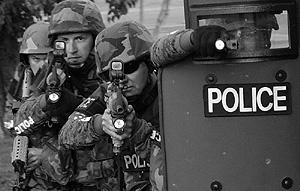 Last October third, a Salt Lake City SWAT team, working with a federal Drug Task Force, kicked in the door of a 76-year-old woman. Last October third, a Salt Lake City SWAT team, working with a federal Drug Task Force, kicked in the door of a 76-year-old woman.As is so often the case, it turned out that the raiders had attacked the wrong home; the target was the house next door, where a police informant had allegedly conducted a controlled drug transaction. An internal review learned that officer responsible for the raid, Detective Cooper Landvatter, falsified information in the affidavit filed to obtain the warrant. What this means is that no probable cause existed for a SWAT raid against either home. Landvatter, who said that he was under pressure to meet a “quota” of drug busts, had misrepresented critical facts to the judge who issued the no-knock warrant. The detective claimed to have witnessed a cocaine deal at the house, but later admitted that he lost sight of the alleged transaction. He also altered other key details in his affidavit. In what we are supposed to consider an act of punishment, Salt Lake City Police Chief Chris Burbank imposed a 20-hour suspension on Detective Landvatter. However, the officer faces no further disciplinary action or criminal charges for committing perjury and abetting a home invasion that terrorized an elderly woman. |