|



Conservatives versus Libertarians on Income Taxationby Jacob G. HornbergerJan. 18, 2012 |
Popular 
DOJ Indicts Jewish Group for 'Large-Scale, Decade-Long Insider Trading Scheme'

Ben Shapiro: Trump Should 'Just Blow Up Kharg Island'

Trump Expected to Pick Kevin Warsh, Son-in-Law of Zionist Billionaire Ron Lauder, as Fed Chair

IDF Soldier Takes Sledgehammer to Jesus Statue During Operations in Lebanon
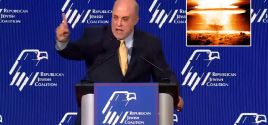
Mark Levin and Jonathan Pollard Push for Nuking Iran

|
 The current debate over income-tax rates in the GOP presidential race highlights another major difference between conservatives and libertarians. It is a debate that involves moral, philosophical, economic, and practical issues. Most important, it is a debate over the meaning of freedom. In the recent South Carolina debate, the candidates were asked what they would like to see as the top rate for the income tax. Four of the candidates responded as follows: Rick Santorum: two rates, 10 and 28 percent. Mitt Romney: 25 percent. Newt Gingrich: 15 percent. Ron Paul: 0 percent. At first blush, it might appear that the differences simply relate to percentages. Not so. The difference between Ron Paul’s answer and the other answers is the difference between day and night. By responding with a “zero percent,” Paul is giving the standard libertarian position, one that differs fundamentally from that of conservatives: that there should be no income tax at all. In other words, libertarians don’t simply advocate a zero income tax rate. We call for the abolition of the income tax and the IRS. Conservatives, on the other hand, advocate the continuation of the income tax and the IRS. The fight among themselves and among liberals is over the precise rate of income taxation and over how progressive the income tax should be. Read More |