|



Should There Be Shop-Closing Laws?by Jeffrey A. TuckerMay. 23, 2011 |
Popular 
Trump Welcomes 'The Highly Respected' Alan Dershowitz Into The GOP, Shills His New Book

House Passes NDAA With Section 219 Aimed at 'Merging' U.S. and Israeli Militaries

Ben Shapiro: Trump Should 'Just Blow Up Kharg Island'

Netanyahu Confirms Plan to 'Merge' U.S. and Israeli Militaries

Sen. Lindsey Graham Dead at 71

|
 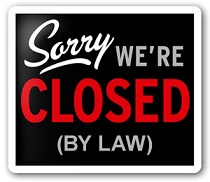 A really cool thing is happening in Germany. After decades of strict laws regulating when stores can open and close (Ladenschlussgesetz), the laws are progressively liberalizing. Since 2006, the decision has been left to the individual states. Whereas commercial establishments once could not open their doors before 6 a.m. or keep them open past 10 p.m., now many open earlier and close later. A really cool thing is happening in Germany. After decades of strict laws regulating when stores can open and close (Ladenschlussgesetz), the laws are progressively liberalizing. Since 2006, the decision has been left to the individual states. Whereas commercial establishments once could not open their doors before 6 a.m. or keep them open past 10 p.m., now many open earlier and close later.Consumers are celebrating, while labor unions and regulators are not. In the United States, we have no national history of such laws, apart from restrictions on Sunday shopping, which are left to the states and counties. And even with these so-called blue laws, the general trend has been toward liberalization. The subject intrigues me because it is like many other such subjects that touch on the very viability of liberty itself. If you were to think this issue through using what F.A. Hayek calls a "constructivist" mindset — the presumption that society is a giant Lego model with pieces that must be assembled and disassembled at will — it is not difficult to dream up many seemingly reasonable arguments for why a commercial society must have such laws. Do we really want to leave such things to the "anarchy of the market"? So let's just pretend to be statist constructivists for a moment and see how this works.
Consumers may or may not take advantage of longer hours. In fact, it is the consumers that dictate whether it is in the interest of the store to stay open after hours. Stores might try it and find it pointlessly unprofitable and stop. For some reason I don't understand, most barbershops in the South close on Wednesday. Such is their right. It works for them. When it stops working, they will change. Or it could go the other way. In my own town, a pharmacy long had short hours (8 a.m. – 5 p.m.) until a big chain store came in across the street with a 24/7 policy. Faced with declining profits, the old store adopted the same hours. Now there are two pharmacies facing each other, each of which is open at all times. Who wins? Both seem profitable, but the real winner here is the consumer. My point is that this is a case where the idea of freedom would seem not to work — from a constructivist point of view — and where a plan seems needed. This is true in a host of areas: the freedom to live where you want, work where you want, invest in what you want, drink or smoke what you want, freely trade with anyone from any nation, etc. You hear these kinds of objections when you propose that any law be repealed: why, there will be chaos! It turns out that the real chaos comes when the state attempts to allocate scarce resources rather than leaving it to the price system and its talent for revealing what is economically rational or irrational. Shop-closing laws presume to tell people how they should use their time. But time, writes Mises, is a scarce resource; man "must economize it as he economizes other scarce factors." Only private actors — not politicians and bureaucrats — are in a position to make decisions concerning how it is used. Their choices can be accessed based on a business model rather than arbitrary political wrangling. This is why liberty works and the state fails so miserably, and why the best-laid plans in politics never work out as expected. Consider the case of patents. People say that if we get rid of patents, no one will invent anything anymore, and those who do will have their ideas and just profits stolen. And yet for most of human history, patents have not existed; and patents have not been part of the biggest technological explosions in our history. In fact, the opposite is true: patents slow down the pace of development by granting monopolies to favored producers. They thereby discourage innovation in the name of encouraging it. This is why I found Ron Paul's answer on the drug question at an early Republican debate to be so incredibly brilliant. The questioner asked him if he would favor legalized heroin. The viewers are supposed to be horrified, and surely many were. He said the real issue is liberty, and then he asked the question: how many people here in this room would start using heroin if it were legal? How many people would say: oh, we have to have these laws to keep me from being an addict? Everyone cheered, because we knew the answer! There is a remarkable rationale behind what he said. He pointed out the simple truth that we are all what we make of ourselves, and the state isn't really making us better people. To be a good or bad person is a choice, and the state's laws don't really possess the magical power to influence that decision. This was an extremely rare moment in human history, when good sense actually emerged from a political debate. It often happens that when societies adopt some constructivist rule, the inner contradictions eventually end up leading to its repeal. This is what happened in Germany. The closing laws couldn't really apply to gasoline, for example. After all, we can't have people pulling over on the Autobahn and sleeping while they wait for the gas stations to open. Then the bakers too pointed out that they have to be open earlier. Then there are shops for tourists, who don't have all the time in the world. So special zones of freedom were created for them. Gradually, the laws were eroded to the point where human choice was permitted to prevail. Does this cause a race to the bottom? No, it causes a race to serve people through excellence. In other words, it makes everyone happier than they would otherwise be. It makes for a better society. Liberty works because it permits people to work out their problems through exchange and cooperation. No one is coercing anyone to do anything. Everything happens through consent; nothing happens through force. In some ways, liberty is the craziest and most implausible idea anyone ever dreamed up. And yet only liberty really accomplishes that seemingly elusive dream of a prosperous, orderly, and peaceful society in which every member is permitted to have a role in its development. It takes some imagination to understand how. We are fortunate to be living in times when the digital world of relative freedom is providing us a model of the ideal. Every day, there is improvement. Every day, we are served up better and better ways of doing things. Imagine if the physical world were just as free as the digital one, drawing on the creative powers of everyone in the world in the service of the common goal of finding ever-better ways to do things. What would life be like? How much are we being held back by seemingly necessarily laws that actually make us all poorer and less civilized than we would otherwise be? It takes a certain kind of brilliance to imagine such counterfactuals. This is why we owe a particular debt of gratitude to the liberal tradition of thought for helping us make sense of how the truly implausible can become the only truly workable ideal. __ Jeffrey Tucker is the editor of Mises.org and author of Bourbon for Breakfast: Living Outside the Statist Quo. Send him mail. See Jeffrey A. Tucker's article archives. |