|



'CSI effect' leaves fingerprint on Twin Cities courtrooms: Prosecutors are changing tactics to counter misperceptions created by popular TV forensic crime dramas.Star TribuneNov. 27, 2005 |
Popular 
Mark Levin Accuses Me of 'Trying to Commit Violence' Against Him by Clipping His Show
From Aid to Dependency: Israeli Agent Reveals the Real Goal of 'Merging' U.S. and Israeli Militaries
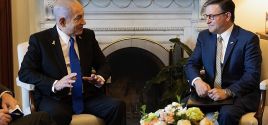
House Passes NDAA With Section 219 Aimed at 'Merging' U.S. and Israeli Militaries
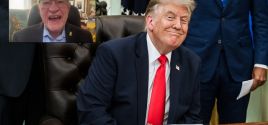
Trump Welcomes 'The Highly Respected' Alan Dershowitz Into The GOP, Shills His New Book
ADL, Jewish Groups Lobby California to Classify Jews as a Race, 'Not Just a Faith'

|
 Dakota County authorities thought their felony case against a driver charged with criminal vehicular operation was solid. But jurors knocked it down to a misdemeanor, convicting the defendant of reckless driving instead. Then they told the prosecutor they were disappointed with the case. "They wanted to see a computerized reenactment," said Phil Prokopowicz, chief deputy county attorney. "It was something they expected." Prokopowicz said he fears the recent case is an example of what prosecutors across the country are calling the "CSI effect": Juries filled with growing numbers of crime-drama devotees demanding the same high-tech, slam-dunk proof of guilt that their TV heroes produce every week. No one has proved the effect, but the huge audiences that popular dramas such as "CSI: Crime Scene Investigation" are drawing are worrying some prosecutors so much they have begun changing their courtroom tactics. Judges and attorneys around the Twin Cities say prosecutors are now routinely asking questions about the television shows during jury selection -- and at times striking prospective jurors from serving on trials because of the perceptions they say the crime dramas are causing. Because of the "CSI" shows, some prosecutors contend, more jurors believe every crime scene yields forensic evidence that offers conclusive scientific proof of innocence or guilt, almost instantly. When selecting jurors, Hennepin County Attorney Amy Klobuchar said, prosecutors are now trying to explain "that real life is not like a TV show ... and that just because there is no DNA evidence does not mean that there is not substantial other evidence sufficient to prove our case." Even so, some prosecutors say they are asking police and crime labs to do more testing for fingerprints and DNA evidence out of concern that jurors expect to see more of it at trials. Forensic scientists at the Minnesota Bureau of Criminal Apprehension (BCA) also say they are getting more requests from prosecutors to testify about why fingerprints and DNA evidence cannot be recovered at every crime scene -- and why they don't always yield conclusive proof. Klobuchar said there's great new pressure to provide "negative forensic evidence." Prosecutors say they are feeling more compelled to call such witnesses because defense attorneys are arguing more often that key evidence was not tested. "You see more [defense] arguments like, 'Sure, they have an eyewitness, but they never did a DNA test on the handle of the weapon,' " Prokopowicz said. More forensic proof, please It's possible that the new expectations jurors have for seeing high-tech forensic evidence at trials may be more the result of how much prosecutors have relied on it in recent years -- and not a "CSI effect," said Ramsey County Attorney Susan Gaertner. When DNA evidence was new to the courtroom 15 years ago, Gaertner said, prosecutors had difficulty explaining its value to jurors, or getting them to pay close attention to it. But that's all changed, she said, and the new trend is not necessarily troubling. "Jurors' acceptance of [new] scientific evidence and what it can tell them about a case is a good thing," Gaertner said. "The problem, obviously, is if their expectations are Hollywood-like rather than reality-based." What's undeniably true, judges and lawyers say, is that prosecutors now routinely ask prospective jurors about their TV viewing habits. Criminal defense attorney Anthony Torres said recent jury selections have convinced him that " 'CSI' is the most-watched program on television. It seems three-fourths of the prospective jurors have viewed it." But Torres and Diane Wylie, president of National Jury Project Midwest, a jury-selection consulting firm, said that long before the popular crime shows, defense attorneys asked in court whether authorities had performed enough forensic tests. Both said they've seen no proof of the "CSI effect." Hennepin County District Judge Kevin Burke also said his recent trial experience has convinced him that shows like "CSI" have many fans, but that most prospective jurors seem to know "they are entertainment, and not the real stuff." But Anoka County Attorney Robert Johnson said new courtroom campaigns to counter a potential "CSI effect" are forcing prosecutors and law enforcement officials to try to predict how much forensic evidence a jury will demand -- without overtaxing their labs and budgets. "We may say a forensic test is not relevant to us, and that we have proof beyond a reasonable doubt," Johnson said, "but it may be relevant to the jurors." Meanwhile, some crime-scene investigators are also wondering if law enforcement officials are watching the shows too much. Frank Dolejsi, lab director at the Bureau of Criminal Apprehension in Minnesota, said he heard recently that Wisconsin officers investigating the suspicious death of a man whose body was found along a highway asked a crime lab to do DNA tests on 100 cigarette butts on the roadside. "If we did examinations on every possible item that might be found at a crime scene," Dolejsi said, "our backlog would be worse than it already is." |