|



Backscatter x-ray machines "tear apart DNA"Christopher NullYahoo Tech Nov. 01, 2009 |
Popular 
From Aid to Dependency: Israeli Agent Reveals the Real Goal of 'Merging' U.S. and Israeli Militaries

ADL, Jewish Groups Lobby California to Classify Jews as a Race, 'Not Just a Faith'
U.S. Must Prep to 'Welcome Large Numbers of Jewish Refugees,' Pro-War Lobbyist Mark Dubowitz Says

Israel Lobby Seeking to Revamp U.S. Aid as 'Partnership' Immune to Political Shifts

House Passes NDAA With Section 219 Aimed at 'Merging' U.S. and Israeli Militaries

|
 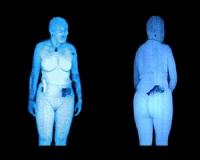 The latest airport security trend is the backscatter x-ray machine, touted as a powerful way to virtually frisk a traveler for contraband without the embarassment of a strip search. The latest airport security trend is the backscatter x-ray machine, touted as a powerful way to virtually frisk a traveler for contraband without the embarassment of a strip search.Though touted as completely safe because the level of radiation is so low, travelers have been nervous about the devices -- and not just because it shows off a nice outline of their privates to the people manning the machines -- but because they remain scared of the health problems they might propose. Looks like a little healthy paranoia might have been a good thing. While the conventional wisdom has held that so-called "terahertz radiation," upon which backscatter x-ray machines are based, is harmless because it doesn't carry enough energy to do cellular or genetic damage, new research suggests that may be completely wrong. Specifically, researchers have found that terahertz radiation may interfere directly with DNA. Although the force generated is small, the waves have been found to "unzip double-stranded DNA, creating bubbles in the double strand that could significantly interfere with processes such as gene expression and DNA replication." I'm not a doctor, but that just doesn't sound good. The question now is whether this is or isn't safe. Terahertz waves occur naturally in the environment, and we're hit with them all the time. But should we bombard ourselves with them willingly every time we pass through an airport? No one knows how much terahertz radiation is OK for the body to absorb: Just like sunlight, a little may be fine, while a lot may be deadly. Where does the line get drawn? Who knows? I, for one, am given a little pause by the news, and hope research continues on before these machines become commonplace. |