|



Hoon to push for compulsory voting in Britain: The Commons Leader has studied the Australian model and believes that it can work hereThe TimesOct. 08, 2005 |
Popular 
Mark Levin Accuses Me of 'Trying to Commit Violence' Against Him by Clipping His Show

Ben Shapiro Pushes Noahide Laws at TPUSA Event, Throws a Fit Over Being Quoted Word-For-Word

From Aid to Dependency: Israeli Agent Reveals the Real Goal of 'Merging' U.S. and Israeli Militaries

ADL, Jewish Groups Lobby California to Classify Jews as a Race, 'Not Just a Faith'
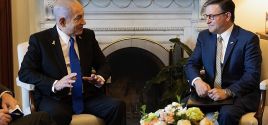
House Passes NDAA With Section 219 Aimed at 'Merging' U.S. and Israeli Militaries

|
 PROPOSALS to make voting compulsory and to shake up the system of registration of voters are to be tabled by Geoff Hoon, the Commons Leader, as part of a government review to increase turnout in elections. Recent figures suggested that some three million people were not on the register at the May election. Mr Hoon, who returned to Britain yesterday after studying the Australian compulsory voting system, said that voters there were fined about £10 if they failed to give a good reason for not voting. He had not found it to be a hugely controversial system. Although it was a long way from being government policy he intended to push for the plan to gauge public reaction. In an interview with The Times shortly before Parliament returns from its 79-day recess, Mr Hoon backed the Australian compulsory registration system. Voters do not have to express a preference; if they not favour any of the candidates they can spoil their ballot papers and vote for “none of the above.” Mr Hoon admitted that his idea appeared “authoritarian”. He said: “That is an obvious criticism that has been made. But on the other hand we do require people to do all sorts of things by legislation such as using seatbelts. My concern is that if turnout continues to fall requiring people to vote in a democratic election every four or five years does not seem to me to be a major attack on people’s civil liberties. “Generations of people have regarded voting as a duty. My Mum and Dad have never, ever, missed a vote. They regard it as something you do. That generation is being replaced by people who, even in their forties, have never voted. They say ‘I don’t vote’ as if they are proud of it. We have to find ways of changing that attitude.” Mr Hoon, freed from his his long spell at the Ministry of Defence, said he wanted to be seen as a modernising Commons Leader and spoke warmly of the massive contribution of his predecessor but one, Robin Cook, who died in August. “Robin was a great parliamentarian whose efforts were always aimed at making Parliament more relevant to people.” The next few parliamentary weeks with be dominated by Charles Clarke’s new anti-terrorism Bill. A combative Mr Hoon declared yesterday that the Government would not “roll over” in the face of objections from retired law lords and must provide the police and the security forces with the powers they wanted. He hoped that ways would be found of keeping the main parties on board. “But I do worry sometimes that out there my constituents, and the constituents of every other MP, want the police to have the powers they need to deal with the terrorist threat. “We are looking for agreement. That will help the parliamentary process. But we have to have effective powers that allow the police to take the necessary action. That means we cannot always accept everything retired law lords may demand.” Mr Hoon floated the idea of bringing the party political conferences forward in the calendar so that Parliament could return earlier and the summer recess is shorter. He said that the remaining 92 hereditary peers in the Lords would soon go, hinting at legislation in the next session of Parliament. “It is important that we get on with that. It is important that we do not leave this as unfinished business,” he said. |