|



Big Brother storms the playgroundA school library fingerprinting scheme is giving children a record, says Brendan O’NeillThe First Post Jan. 27, 2007 |
Popular 
U.S. Must Prep to 'Welcome Large Numbers of Jewish Refugees,' Pro-War Lobbyist Mark Dubowitz Says

Israel Lobby Seeking to Revamp U.S. Aid as 'Partnership' Immune to Political Shifts

Israel Lobby Ousts Thomas Massie From Congress in Most Expensive Primary Race in History

Ben Shapiro: The Israel Lobby Didn't Target Massie Because Of His Opposition to Israel

Thomas Massie vs. The Israel Lobby

|
 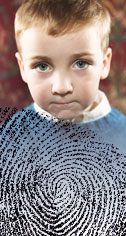 State-of-the-art technology maps children’s vein patterns using near-infrared to confirm their identity State-of-the-art technology maps children’s vein patterns using near-infrared to confirm their identityChildren in Britain are having their fingerprints taken at what some parents believe is an alarming rate. Over the past four years, more than 700,000 schoolchildren aged three to 11 have been fingerprinted and photographed as part of the Junior Librarian scheme. More than 3,500 schools have signed up and new schools are joining at a rate of 20 a week. Many of them do not even seek parental consent before fingerprinting children. Junior Librarian is the brainchild of Micro Librarian Systems. The child presses his or her thumb on to a scanner; the machine takes a reading, converts it into a unique number, and stores the child's information. This means children no longer have to carry around (and lose) library cards. Instead they stick their thumb in a scanning machine that records which books they've borrowed. Other schools are using fingerprint scanners in canteens. This allows for a 'cashless' system, where children use their fingers to record how much they've spent on lunch. A canteen in a primary school in Scotland has installed a state-of-the-art 'vein-patterning' system. It maps children's vein patterns using a near-infrared beam to confirm their identity. Has Big Brother smashed through the schoolgates? The developers of these systems claim this is about efficiency, not totalitarianism. But some parents are kicking up a fuss. The campaign group Leave Them Kids Alone thinks fingerprint info might fall into the wrong hands. Our fingerprints do not change from childhood to adulthood. The group argues that schools - unlike banks and airports, which spend millions on security - are not secure enough to perform biometric scans. |