|



Pope Francis Graph of the DayBy Ian VásquezCato @ Liberty Sep. 24, 2015 |
Popular 
From Aid to Dependency: Israeli Agent Reveals the Real Goal of 'Merging' U.S. and Israeli Militaries

House Passes NDAA With Section 219 Aimed at 'Merging' U.S. and Israeli Militaries

ADL, Jewish Groups Lobby California to Classify Jews as a Race, 'Not Just a Faith'

"I'm Not an Agent for the Israeli Govt," Mark Levin Says at Israeli-Govt-Sponsored Event in Jerusalem

Israel Told Trump of 'Iranian Assassination Plot' Before He Declared MoU 'Over,' Report Suggests

|
 As the Argentine Pope, ever critical of capitalism, visits the United States, my colleagues at HumanProgress.org have posted this graph. 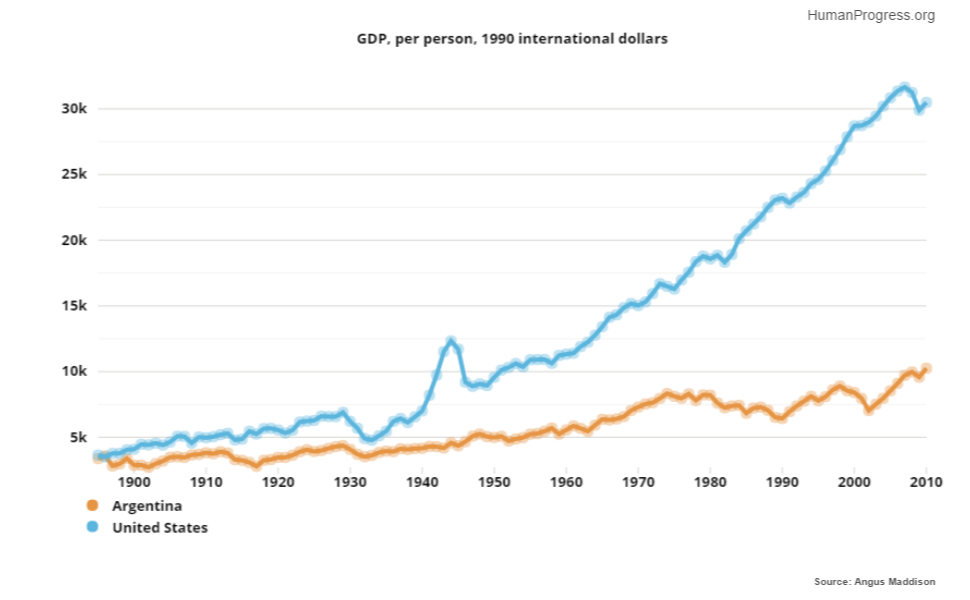 It shows that in 1896, income per person in the United States and Argentina, two of the richest countries in the world, was about identical. Argentina subsequently eschewed the free market, replacing it with trade protectionism and other corporatist policies intended to help the poor by redistributing wealth. By 2010, Argentine income was a third of that of the United States. Perhaps Pope Francis doesn't endorse Argentine economic policies, but having just arrived from Cuba, he missed an opportunity to denounce the lack of freedoms that have kept that island and other Latin American countries poor and repressed. He met with none of the many admirable Cuban dissidents, in or out of prison, who have been peacefully advocating basic rights. Nor did he mention the plight of the Cuban people they represent, even as authorities arrested or detained 250 Cuban activists during his visit. The Cuban Forum for Rights and Liberties (Foro por los Derechos y Libertades), an independent group of dissidents in Cuba, summed up how it felt about, and experienced, the Pope's visit. It read, in part: "We human rights activists, regime opponents and independent journalists have experienced days full of threats, harassment, telephone connections being cut off, homes besieged by the authorities, and violent, arbitrary arrests.The group might have added that the disappointment has spread more widely in the Americas. |