|



The Return Of COICA; Because Censorship Is Cool Againby Mike Masnick, TechdirtFeb. 16, 2011 |
Popular 
Trump Expected to Pick Kevin Warsh, Son-in-Law of Zionist Billionaire Ron Lauder, as Fed Chair

IDF Soldier Takes Sledgehammer to Jesus Statue During Operations in Lebanon
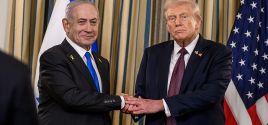
Reuters: Trump Approved Iran Strikes After Speaking With Netanyahu
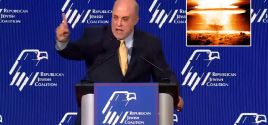
Mark Levin and Jonathan Pollard Push for Nuking Iran
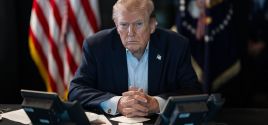
Trump Says U.S. Sent 'A Lot of Guns' to Iranian 'Protesters'

|
 As expected, Congress is holding hearings as it prepares to reintroduce COICA, a horribly written piece of legislation that effectively gives the US government more powers to censor websites (even beyond the Homeland Security domain seizures) by forcing companies to block the site, turn off hosting or refuse to provide other services to the site -- and this can be done with little or no due process, in violation of the basic principles of the Constitution. At least the hearings aren't totally one-sided. Sherwin Siy is presenting an excellent speech that warns how such a law may sound good on a first pass, but has a ton of unintended consequences. There are serious questions about stifling not just plenty of non-infringing speech, but also harming innovation: In regulating copyright, the law is regulating a form of speech. Addressing these issues in the context of the Internet--a potent outlet for free speech of all sorts--adds additional delicacy to these undertakings. Any technical mechanism that can be used to remove infringing content can be abused to remove disfavored, but constitutionally protected, speech. Any legal remedy that can enjoin the distribution of content can be misapplied or misused in the restraint of speech. This means that both technical and legal measures must be narrowly tailored both in their defined targets for action, and in the scope of the effects of their remedies.Meanwhile, the EFF is noting that the massive mistakes highlighted in the recent Homeland Security domain seizures should act as a warning sign for politicians supporting COICA. Criminal copyright infringement is infringement committed “willfully” and in the context of various specific circumstances. Significantly, the websites targeted in the most recent ICE action appear to have merely linked to infringing content. That is, they did not themselves violate any of the exclusive rights of copyright owners that would constitute direct infringement. The ICE agent who signed the affidavit explicitly states that the ten seized domains point to what he calls “linking” websites—i.e., websites that contain “links to files on third party websites that contain illegal copies of copyrighted content.” (He also points out that these linking sites “are popular because they allow users to quickly browse content and locate illegal streams that would otherwise be more difficult to find.” Sound like any search engines you know?)Hopefully Congress realizes what a mistake COICA would be, but we keep hearing from people saying that the entertainment industry has put a huge effort behind COICA and getting it passed as quickly as possible. |