|



Kangaroos victims of factory fluorideDEBORAH GOUGHThe Age Feb. 24, 2010 |
Popular 
Report: Blinken Sitting On Staff Recommendations to Sanction Israeli Military Units Linked to Killings or Rapes

America Last: House Bill Provides $26B for Israel, $61B for Ukraine and Zero to Secure U.S. Border
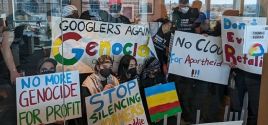
'Woke' Google Fires 28 Employees Who Protested Gaza Genocide

Bari Weiss' Free Speech Martyr Uri Berliner Wants FBI and Police to Spy on Pro-Palestine Activists

John Hagee Cheers Israel-Iran Battle as 'Gog and Magog War,' Will Lobby Congress Not to Deescalate

|
 SCORES of starving and pain-ridden kangaroos have been culled after developing tooth and bone deformities from breathing and ingesting fluoride emissions. Many more are believed to be suffering from growths that will kill them. The affected kangaroos are living near the Alcoa aluminium smelter in Portland, in the state's south-west, and the Austral Bricks factory at Craigieburn. Autopsies performed at Melbourne University on 49 kangaroos culled at Alcoa on a single day last year found all but one were suffering from flurosis, which leads to excessive bone growths, or lesions, on joints in the paws, ankles and calves. It can also cause tooth and jaw deformities that hinder eating and foraging. The Sunday Age has been told more than 200 ill kangaroos living near both affected sites have been culled in recent years, but this figure could not be confirmed. The Environment Protection Authority was first warned of the effect of fluoride dust and fumes on kangaroos living near the Alcoa smelter in 2005, although lameness was detected in some animals grazing there as early as 2001. Jenny Charles, associate professor in veterinary pathology at Melbourne University, said research had found that up to 90 per cent of the roughly 130 kangaroos living at the Portland site had some form of flurosis on their teeth and a quarter had visible limb lumps. Dr Charles said autopsies on Craigieburn kangaroos showed lower levels of fluoride in their systems, but the effects of flurosis seemed to be worse. Other foraging animals may also be affected. Wildlife Victoria alerted the Department of Sustainability and Environment to the plight of the Craigieburn kangaroos in 2008. Wildlife shelter operator Manfred Zabinskas told The Sunday Age last week that he had been horrified when he saw how many kangaroos were sick. ''They were in real pain,'' he said. EPA director of environmental services Bruce Dawson denied the authority had been slow to reduce maximum emission levels. He said that while the levels were safe for humans, it was now clear they were too high for some animals and a new level was likely. However it could take years before research indicated what that level should be. ''We are taking this seriously. Clearly the impact on the local kangaroos and vegetation is not acceptable and action is required,'' Mr Dawson said. He said research by Melbourne University would help guide the EPA's actions. Neither Alcoa nor Austral Bricks has been in breach of their licences to emit fluoride, but Mr Dawson said the EPA had demanded that Austral ''significantly reduce'' its fluoride emissions by building new facilities and upgrading technologies. He said Alcoa had been advised to limit the kangaroos' access to contaminated foliage and the EPA was investigating whether the smelter could reduce its emissions. Mr Dawson said there were plans to herd the kangaroos away from the most polluted areas. Latest federal National Pollutant Inventory figures show Alcoa's Portland plant is Victoria's largest emitter of fluoride dust, with 120 tonnes a year. Austral Bricks' three plants at its Craigieburn site is second largest with a combined total of 66 tonnes a year. The largest Victorian emitter of fluoride overall is Melbourne Water. Austral Bricks' Victorian general manager, Peter Caughey, said a $75 million expansion of the company's newest plant, which would phase out old technologies, was expected to reduce fluoride emissions by between 76 and 86 per cent once works were completed in 2011. He did not admit emissions from the brickworks were affecting the nearby kangaroos, but said the company was taking a cautious approach. The Alcoa kangaroos live on the 500-hectare Portland Aluminium site, known as the ''Smelter in the Park''. The park's operations manager, John Osborne, said the company had taken steps over the years - including incrementally reducing its emission level and funding the Melbourne University research - to tackle the kangaroo problem. ''We are deeply concerned by the potential for low-level emissions to affect the health of any animal grazing close to the smelter and will look for further improvement opportunities,'' he said. Wildlife Victoria chief executive Sandy Fernee said the situation was urgent. Kangaroos were being forced out of their territories and left with contaminated land. |
